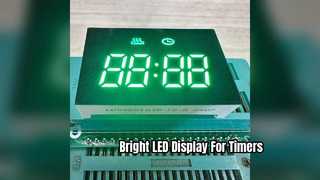
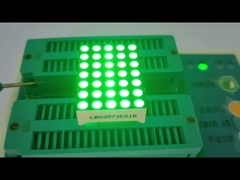
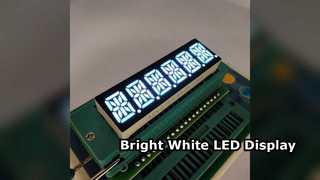
Brief: Watch the demo to catch practical tips and quick performance insights. This video showcases the ultra-bright green and red 7-segment LED display in action, highlighting its application in kitchen hoods and other home appliances. You'll see how its high luminous intensity and stable performance make it ideal for numeric displays in various electronic products.
Related Product Features:
Features an exceptionally long working lifetime of 80,000 hours for reliable, long-term operation.
Delivers high luminous intensity output with low forward voltage for bright, clear visibility.
Consumes extremely low power and current, making it energy-efficient for various applications.
Provides evenly distributed luminous intensity across each segment for consistent readability.
Built to industrial standard sizes for easy integration into existing panel designs.
Offers excellent reliability and stable performance even in bright ambient light conditions.
Complies with RoHS and REACH environmental standards for safe and sustainable use.
Widely applicable for audio equipment, instrument panels, and home electronic appliances.
FAQs:
What is the typical luminous intensity of the green and red LED displays?
The Pure Green (G) version offers 120-180 mcd, while the Ultra Bright Red (UR) provides 80-100 mcd, ensuring high visibility in various lighting conditions.
What are the main applications for this 7-segment LED display?
It is widely used in kitchen hoods, air conditioners, audio equipment, home appliances, and instrument panels for displaying numeric information like temperature and humidity.
How does the product ensure reliability and long-term performance?
With an 80,000-hour lifetime, stable performance across a wide temperature range (-40 to +85°C), and compliance with RoHS/REACH standards, it delivers consistent operation in demanding environments.
Can these displays be customized for specific product designs?
Yes, we offer OEM and ODM services, allowing customization of sizes, LED colors, and functional icons to meet your unique requirements.